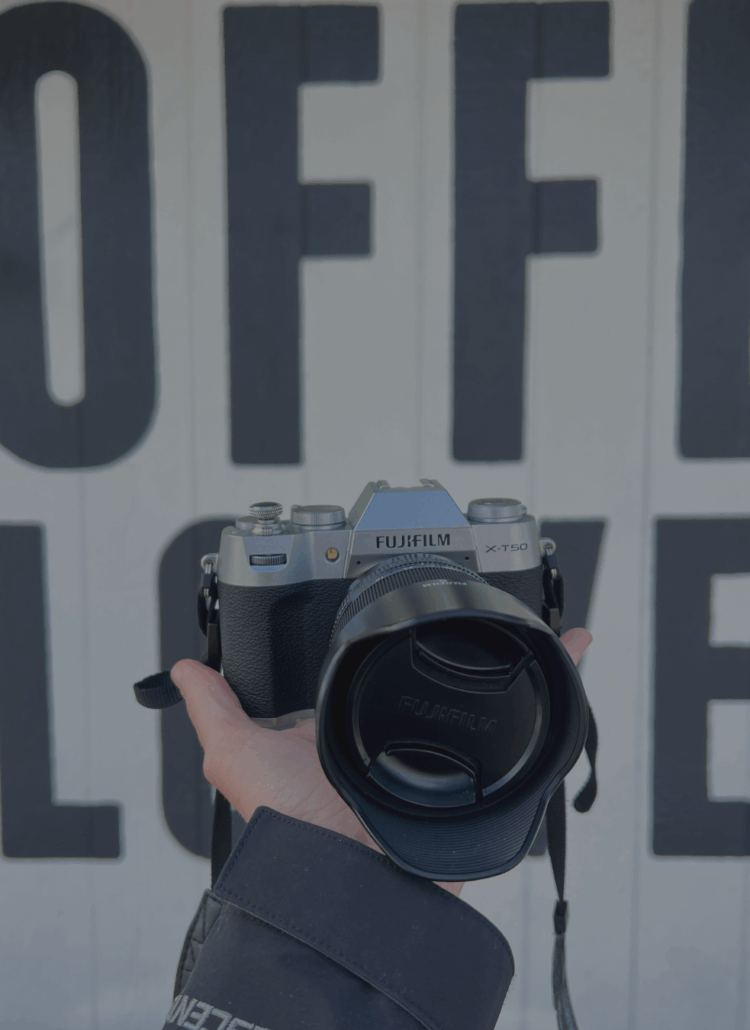
Over a year ago, I asked myself a question you may be asking yourself now: Should I get the Fujifilm XT50 or the X100VI?
After much debate, I went with the XT50—a camera many claimed was a great X100VI alternative—because I couldn’t find an X100VI available anywhere at retail price.
For a time, the Fujifilm XT50 was a blast. However, a few months in, my frustrations with the X-T50 became hard to ignore. And I started considering switching cameras.
Then I stopped by a camera shop in Boulder to buy a roll of film and stumbled upon a brand new X100VI (something I gave up on long ago). I took it as a sign and bought it.
I told myself I’d sell it if I didn’t like it. But not long thereafter, I sold my Fujifilm XT50.
Since then, I’ve had a lot of people ask why I’d choose a fixed-lens camera over one with interchangeable lenses. Logically, it seems like that decision doesn’t make much sense.
And I agree. So this post is my answer.
I hope it helps!
Disclosure: This post may contain affiliate links. If you make a purchase through them, I may earn a small commission at no extra cost to you.
The Purpose of This Camera
First, I think it’s important to clarify the purpose I wanted this camera to serve, because (1) it’ll help you understand where I’m coming from and (2) it might be similar to the purpose you’d like yours to serve.
At the time, I already had a Sony kit and wasn’t looking for a professional camera. I wanted a carry everywhere camera that made photography feel fun again.
What I was looking for:
- Lightweight and easy to carry around
- Compact enough to bring everywhere
- More than 26 Megapixels (upgrade from my travel Sony, crop flexibility)
- Weather-resistance (I am adventurous and don’t want to worry)
- A built-in flash (less to carry around, more options for creating)
- Simple and intuitive controls (the camera stays out of my way)
I was drawn to Fujifilm for the film simulations, but ultimately I wanted a creative tool that made documenting my life, travels, everyday moments, and moments on the streets feel fun & easy.
For years, I’d heard photographers rave about how fun the Fujifilm X100 series cameras are. When boredom struck with my four-year-old Sony camera, I couldn’t get the X100VI out of my mind.
The problem? The Fujifilm X100VI was nearly impossible to find at retail price.
The Fujifilm X100VI VS XT50
Then I discovered the Fujifilm XT50… and it sounded like an ideal alternative.
As you may know, the Fujifilm XT50 and X100VI have a lot of core similarities.
Most notably, the Fujifilm XT50 and X100VI have the same 40 megapixel APS-C sensor, rear articulating screen, video capabilities, Fujifilm battery, and one memory card slot. Both cameras also have access to Fujifilm film simulations, IBIS, and a built-in flash.
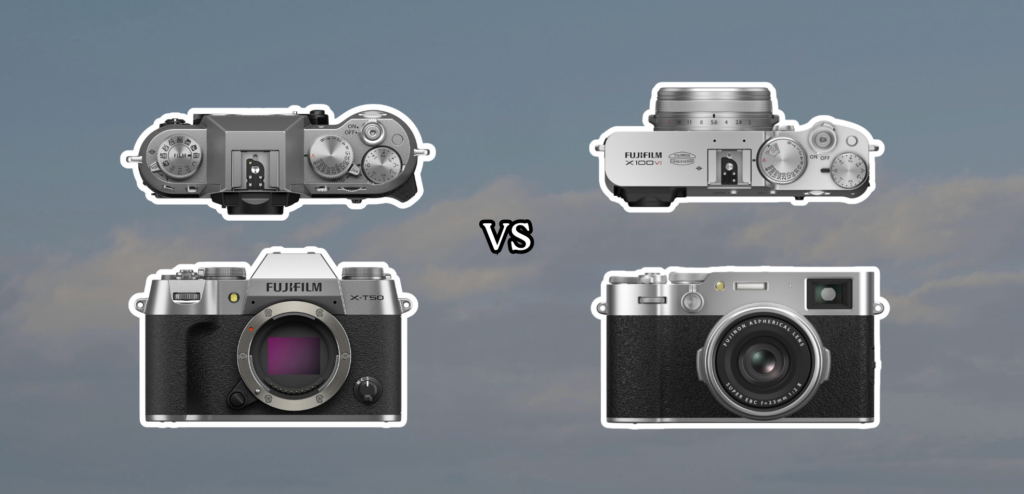
However, the Fujifilm X100VI has quite a few additional features. Including the following:
- Leaf shutter
- Built-in ND filter
- Rangefinder design
- Fixed 35 mm equivalent lens
- Hybrid viewfinder (EVF/OVF)
- Dual shutter speed/ISO dial
- Can become weather-resistant
On the other hand, the Fujifilm XT50 has a more classic film camera design. It also has a lower resolution EVF (something I didn’t think would matter but did), and a film simulation dial in place of an ISO dial. The XT50 also supports interchangeable lenses and is NOT weather-resistant.
At the time, a lot of photographers were calling the Fujifilm XT50 a great X100VI alternative. If you don’t need all the additional features on the X100VI, why not get the XT50? For me, the XT50 felt like it had everything I needed (except weather-sealing). I figured I could slap a pancake lens on it and it’d be close enough to an X100VI. Honestly, I thought it would be better, because I could change the focal length!
And because I was impatient and wanted a new camera right then, I got the XT50.
Logically, this decision made sense.
In action, it eventually didn’t.
Why I Chose the Fujifilm X100VI
1. Better User Experience
I chose the Fujifilm X100VI over the X-T50 for one simple reason: it feels better to use.
A lot of the little frustrations I had with the XT50 don’t exist on the X100VI.
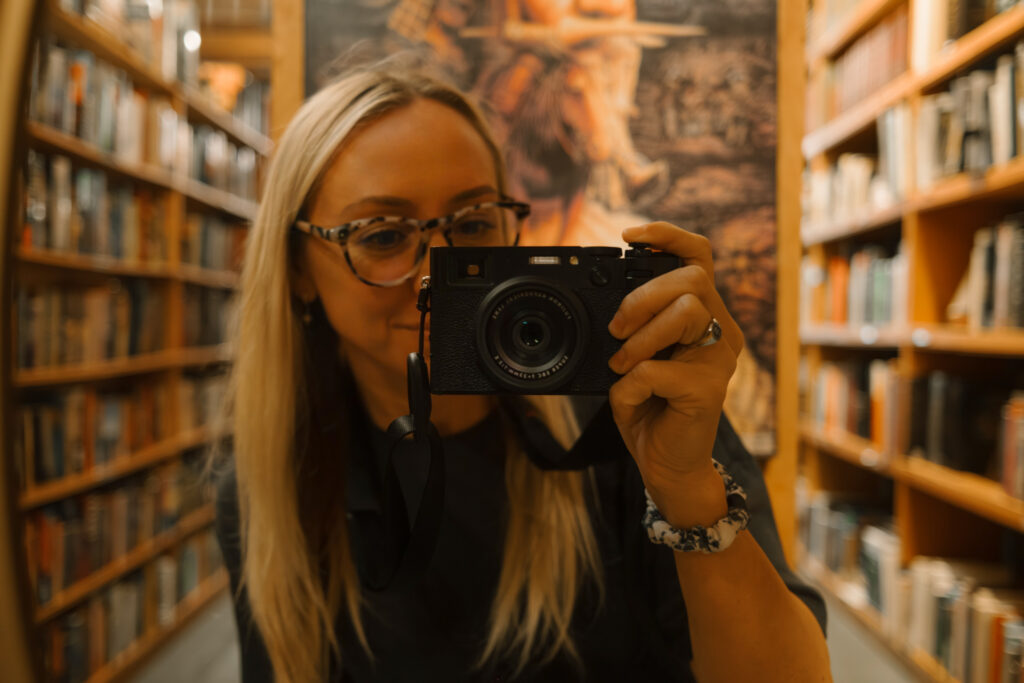
Why I prefer the X100VI:
- Better EVF: the X100VI’s electronic viewfinder is noticeably easier to use in bright daylight. I struggled to expose my images correctly on the XT50.
- Weather sealing: the X100VI is weather-resistant with an adapter ring and filter (a worry of mine).
- Dials: I prefer the X100VI’s shutter speed/ISO dial and button placements over the XT50’s.
- Controls: everything feels simple, intentionally placed, and easy to use.
- Sturdy design: all my settings stay put.
And while the below settings are not super important to me, they have made the shooting experience feel more fluid.
- Leaf-shutter: smaller, quieter, and can sync flash with high shutter speeds.
- Optical Viewfinder (OVF): a rare bonus on a mirrorless camera, I’ve used this at night several times.
- Built-in ND filter: shoot wide open in bright light, no attachments needed
Within the first few days of owning the Fujifilm X100VI, I completely understood this camera’s hype. It’s so fun to use!
The Fujifilm X-T50, while a great camera, didn’t always align with how I like to shoot. I tend to shoot quickly and discreetly, focusing on candid, never-happening-again moments, and for me, the X-T50 often made that feel harder than it needed to be.
Overall, it was less about the additional features and more about how the cameras felt to use day-to-day in action. The X100VI supports me, while the XT50 often didn’t.
Recommended read: I Love the Fujifilm XT50 — But These Things Frustrate Me
2. The Controls Make Sense
If you’ve shot film, Fujifilm’s external dials/controls will probably feel familiar and easy to use. However, if you’re used to using a camera with a PASM dial, the external controls may slow you down at first.
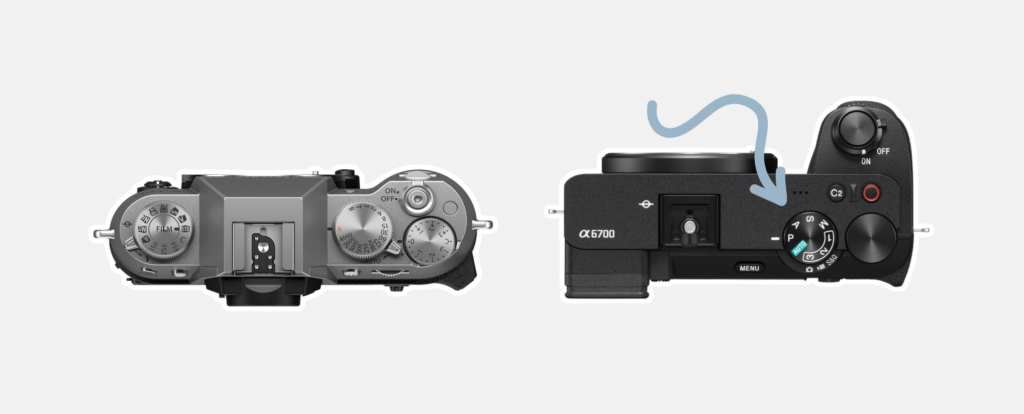
At first, I wasn’t a huge fan of the retro external dials on the XT50 because they often worked against me. I constantly accidentally knocked and changed settings, and it drove me bonkers.
While I knocked just about everything, one thing that caused me a lot of friction was ISO. The X-T50 doesn’t have a dedicated ISO dial, so I relied on the front command dial, which changed ISO far too easily. I missed shots and ended up with unusable files simply because my ISO changed itself.
The X100VI has a dedicated dual shutter speed and ISO dial. On the X100VI, you lift up on the dial, twist it to set your ISO, and then push it back down to lock it in place. In six months, I’ve never accidentally changed my ISO (or shutter speed) on the X100VI.
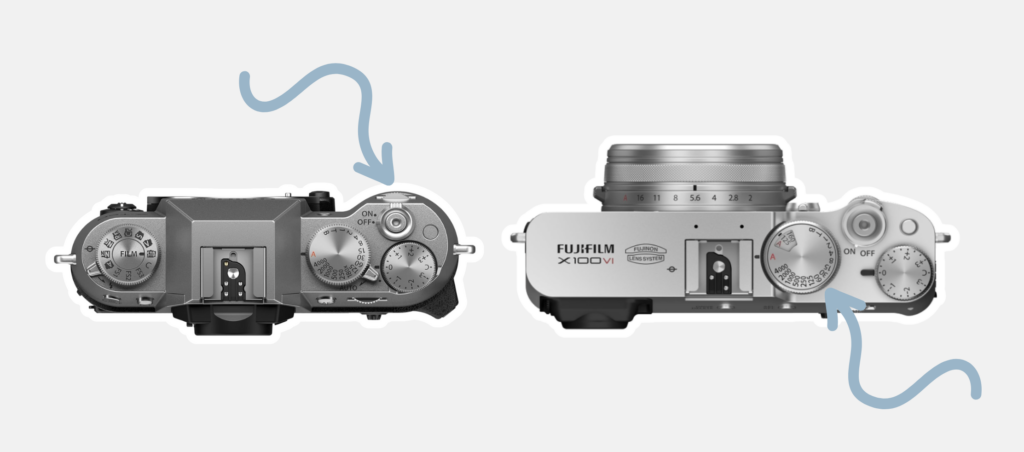
Additionally, when I first got the Fujifilm XT50, I was excited for the film simulation dial, but I quickly realized it was redundant and often a distraction. I wanted an ISO dial instead. In practice, it became another external setting to check. I left it on C and adjusted film simulations elsewhere.
On the X100VI, I assigned film simulations to a programmable front button. It’s out of the way, quick to access, and it’s one less external dial to double-check.
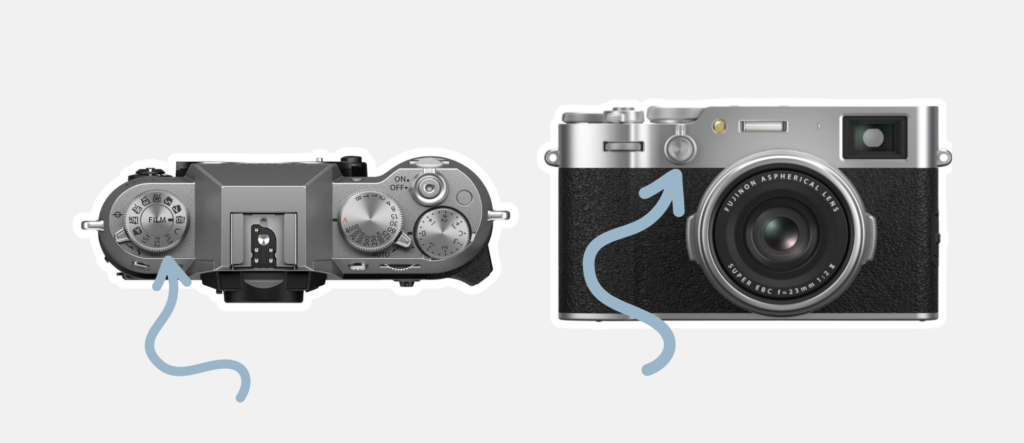
Overall, the controls make sense on the X100VI for me. Only essential external dials/controls are present on the camera, and they stay put. For me, it feels less cluttered and less distracting.
With the XT50, there was a time when it felt like I was troubleshooting a new issue every time I used the camera. Either an external dial would accidentally change, or it would just randomly malfunction. But I’m stubborn and stuck it out.
However, when I got my hands on the X100VI, I felt a sense of relief. It didn’t get in my way as much. Of course, this could partially be due to the fact that I am now more familiar with Fujifilm cameras, and problems are easier to solve when they arise. But I also believe it’s because the X100VI doesn’t feel as finicky.
Since switching to the Fujifilm X100VI, I’ve really grown to like Fujifilm’s external dials. And oddly enough, I think I prefer external dials to a PASM dial now.
Recommended read: Why I’m Selling My Fujifilm XT50
3. The Restriction
We have to talk about the elephant in the room, the 35mm equivalent fixed lens.
The fixed lens might seem restrictive, and well, it kinda is. If you love shooting with a zoom or telephoto lens, this camera might not be the best fit for you. If you already have a full camera kit from another brand (e.g., Sony or Canon) and you like using this focal length, this might be ideal for you. Less gear, less decisions, and less feeling tempted to buy a second lens setup.
Never in a million years did I think I would choose a fixed lens camera over one with interchangeable lenses. Especially a camera with a 35mm equivalent lens.
But using the X100VI has pushed me to shoot differently, and I’ve grown to like it.
You can see some images created on the X100VI in the carousel below.
And it’s great to know that if you ever want a wider or tighter perspective, Fujifilm has two conversion lenses for the X100VI.
There’s the Fujinon TCL, which turns your lens into a 50mm equivalent, and the Fujinon WCL, which turns it into a 28mm equivalent lens. I also recently learned that Viltrox created a Fujifilm X100VI TCL and WCL adapter for less than half the cost, too.
Knowing my favorite focal length (50mm) was “available” if I wanted it felt reassuring.
Additionally, there’s a built-in digital zoom, but you do lose megapixels when using it.
So while yes, the fixed lens camera is restrictive, that restriction simplifies things.
4. The Simplicity
The X100VI is simple and gets out of my way.
I love that it’s so easy to carry around and doesn’t require too much thinking or lugging around a bunch of additional accessories.
The camera has everything I need in one tiny package. I’ve effortlessly traveled with it across the country, taken it on countless weekend getaways and dozens of street photo walks, brought it on a 60+ mile bike ride in Tucson, Arizona, and I have carried it around nearly every day in my purse.
The X100VI’s fixed lens also simplifies camera accessories. Because I’m only working with one lens—and because the camera has a built-in ND filter—I don’t really need much else. I have a cheap adapter ring and a UV filter to protect the lens and add weather resistance, and I occasionally throw on a Glimmerglass filter at night. That’s it.
If I ever want to add another filter for my X100VI, I only have to buy it once. I’m not juggling multiple filter sizes or rebuying the same accessories for different lenses (unless I get a teleconversion lens).
Additionally, if you’re new to Fujifilm, there’s definitely a learning curve with these cameras. Even with many years of photography experience under my belt, I was overwhelmed by how customizable the XT50 was at first. There were so many customizable menu options, settings to tweak, external settings to check when out shooting, and of course, the distraction of lenses. The XT50 never meshed with me. But for some reason, the X100VI did.
The X100VI’s intuitive controls, built-in features, lens restriction, and simple design helped simplify creating for me.
Recommended read: The 52-Week Photo Challenge: My Experience, Year With Fujifilm, and Lessons Learned
Who is the Fujifilm X100VI for?
The Fujifilm X100VI feels like the perfect second camera for someone who already has a full kit and wants a simple, everyday carry that’s genuinely fun to use.
It’s especially well-suited for photographers who enjoy rangefinder-style cameras, are comfortable working with a 35mm equivalent focal length, or simply want an easy way to document everyday moments without overthinking their gear.

If you’re looking for a compact camera with a built-in flash, built-in ND filter, and a hybrid viewfinder—and you value simplicity over flexibility—the X100VI makes a lot of sense.
It’s probably not the right choice if you need interchangeable lenses, dislike a 35mm point of view, frequently shoot fast-moving subjects, or want one camera that can do everything.
It’s not for everyone, but for the right photographer, it’s so much fun!
Who is the Fujifilm XT50 for?
The Fujifilm XT50 is great for someone who wants a highly capable compact camera with interchangeable lenses. If you shoot more slowly and deliberately, you will probably enjoy using this camera more than me.
In my opinion, the Fujifilm XT50 feels ideal for those who are familiar with Fujifilm and looking to upgrade to a larger sensor compact Fujifilm, or those who have a bigger Fujifilm camera (e.g., XT4 or XH2) and a bunch of Fuji lenses and want a small body to carry around daily or use for travels.

However, I wouldn’t recommend the XT50 for brand-new beginners or those who are looking for a simple point-and-shoot camera. Its highly customizable features can feel overwhelming!
Alternative Fujifilm Cameras
When I was researching what photography-focused Fujifilm camera to get, there were a few additional alternatives I looked into.
The first two options didn’t align with my needs, but they may align with your needs. And the last option… I now own one!
Fujifilm XT30iii
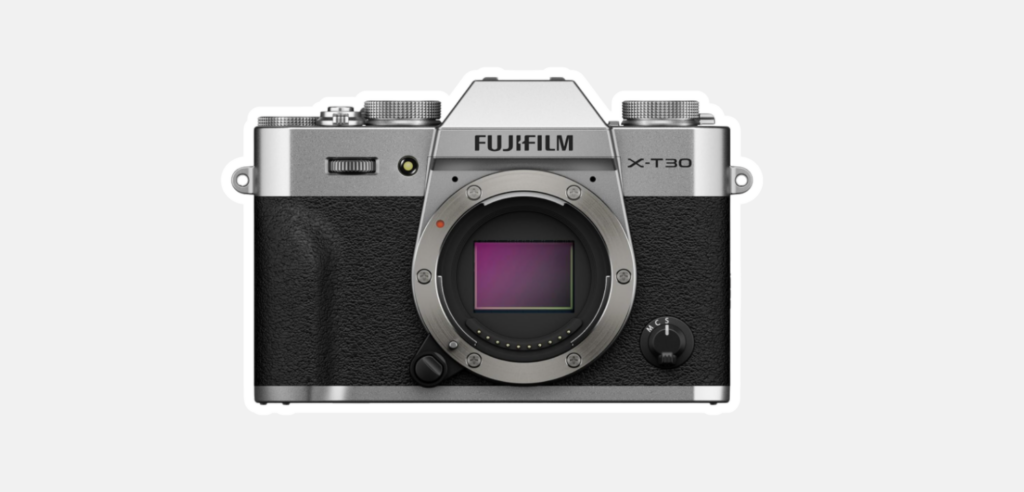
The Fujifilm XT30 line is a great option for beginners. They’re more affordable than many other X-series cameras, support interchangeable lenses, and have a built-in flash. The 26 MP files are also much easier on storage (RIP to my computer storage since switching to a 40 MP camera — I had to purchase another external hard drive).
With the new release of the Fujifilm XT30iii, you can often find the older XT30ii secondhand for a good price, too.
Fujifilm X-E5
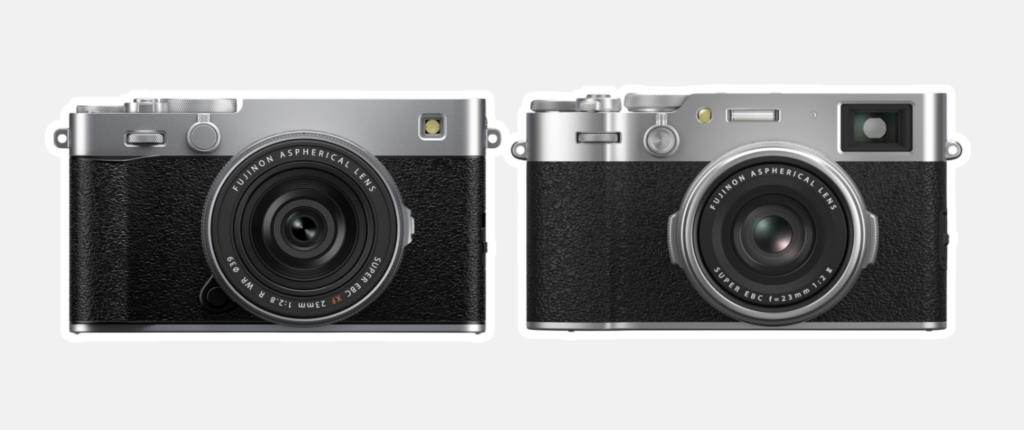
As you can see above, the XE5 has a similar look and feel to the X100VI in terms of size and rangefinder-style design. However, it doesn’t have a fixed lens like the X100VI. It is sold with a similar 23mm kit lens.
Unfortunately for me, it lacks a built-in flash and a dedicated ISO dial, and instead features a film simulation dial like the XT50. These were deal-breakers for me, but it’s a well-loved camera and a great fit for many photographers. Especially those who already have Fuji lenses and want to add an easy-to-carry-around camera body to their kit.
If you don’t care about having a built-in flash, built-in ND filter, OVF, or dedicated ISO dial, the Fujifilm XE5 could be a great alternative option for you.
Fujifilm XT5
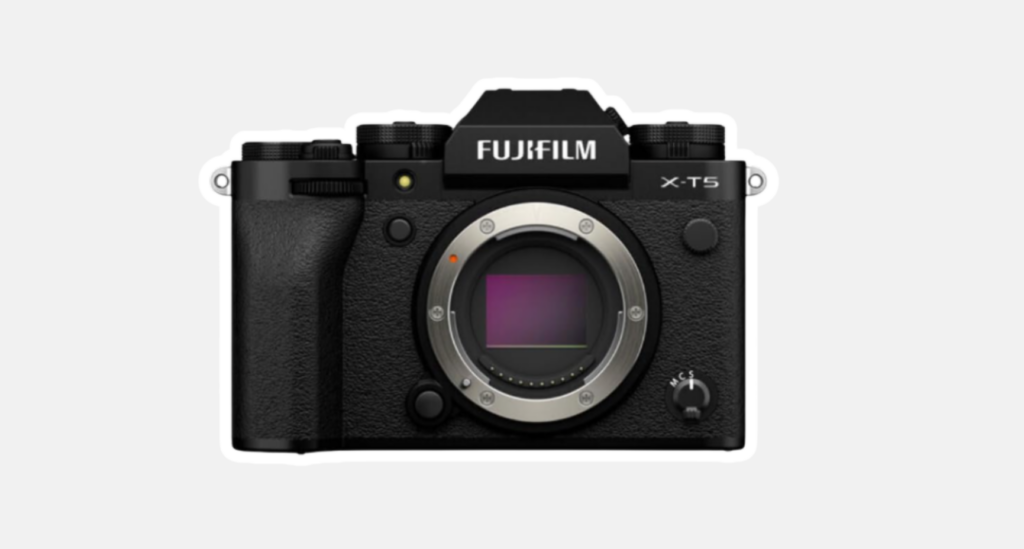
The XT5 feels like the XT50’s older sibling. Now that I own one, I can confidently say it resolves many of the frustrations I had with the XT50 camera body. The XT5 is slightly bigger than the X100VI, but it has a more comfortable grip and different features.
Paired with the pancake XF 23mm lens or XF 27mm lens, the Fujifilm XT5 can feel small.
If you have bigger hands or prefer a slightly bigger camera with interchangeable lenses, this could be great for you. If you’re looking for a camera that could work professionally and as an EDC, this is a solid option.
Tips to Choose the Right Fujifilm Camera
Firstly, it helps to be clear about what you want in a camera.
What role will this camera play for you — something fun to complement an existing kit, or the camera you use for everything? Would you be better off with interchangeable lenses, or do you genuinely enjoy shooting at 35mm? Do you need all the features of the X100VI, or do they feel like overkill? Do you need 40 megapixels or would 26 megapixels be more than enough?
Once you’ve narrowed down your options based on your true needs and wants, the best advice I can give is to hold the camera.
If it feels awkward, heavy, or uncomfortable, you’re less likely to use it. And a camera you don’t use—no matter how good it is—probably isn’t the right camera for you.
Final Thoughts
The Fujifilm XT50 and X100VI are both excellent cameras — they’re just built for different kinds of photographers.
Most cameras are really good these days. Yes, some specs matter, but the right camera for you often comes down to how it feels to use, how it impacts your workflow, and whether or not it works with how you shoot. The only way to know what camera is right for you is to get your hands on it.
Now I have the Fujifilm XT5 and the X100VI. My XT5 is my more traditional, do-everything camera, while my X100VI has been my easy-to-carry everywhere camera.
And while my time with the Fujifilm XT50 was influential, I haven’t missed it once.
Recommended read: How the Fujifilm X-T50 has changed my photography