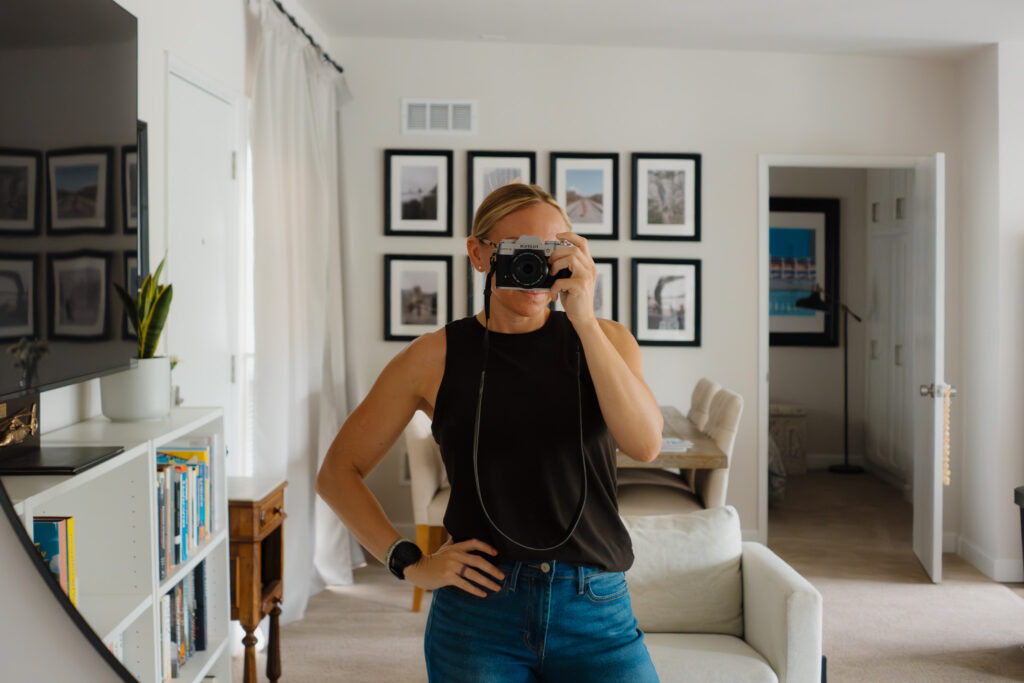
I don’t know what it is, but the Fujifilm X-T50 makes me feel like a photographer.
I’ve been taking pictures off and on for about two decades, and I have never had that experience with a camera before. Yes, the Canon 5D I used to shoot on felt like an amazing camera, and my Sony a6600 feels easy to use, but neither of them made me feel like I was a photographer. I just felt like someone who likes to take pictures.
But there is something about shooting on a Fujifilm camera that just makes me feel like a photographer. Maybe it’s the aesthetic camera, analog feel, or Fujifilm simulations. I’m not sure, but there’s something.
In this post, I’m sharing how the Fujifilm X-T50 has changed my photography in the four months I’ve been shooting with it.
I have become a light seeker again
If you’re not already aware, light is one of the most important elements in photography. It can completely transform the way an image looks and feels.
Most natural light photographers plan their shoots around the time of day that complements their style. Some prefer golden hour, others love early mornings, harsh midday sun, rainy days, or soft overcast skies. And each type of light provides a different mood.
When I was traveling nonstop and documenting everything, I got comfortable shooting in all kinds of lighting. It was great for building my skills and understanding how light affects an image, but not so great for consistently capturing the look I was going for.
After my 365-day photo challenge ended and I settled into a slower pace in Coronado, California, I kept bringing my Sony out in suboptimal light. Out of habit. And unsurprisingly, my images felt… blah.
That changed when I got my hands on the Fujifilm X-T50. This camera made me a light-seeker again.
It’s not that the X-T50 can’t handle suboptimal lighting. It can. But I fell in love with the photos I took when the light was beautiful.
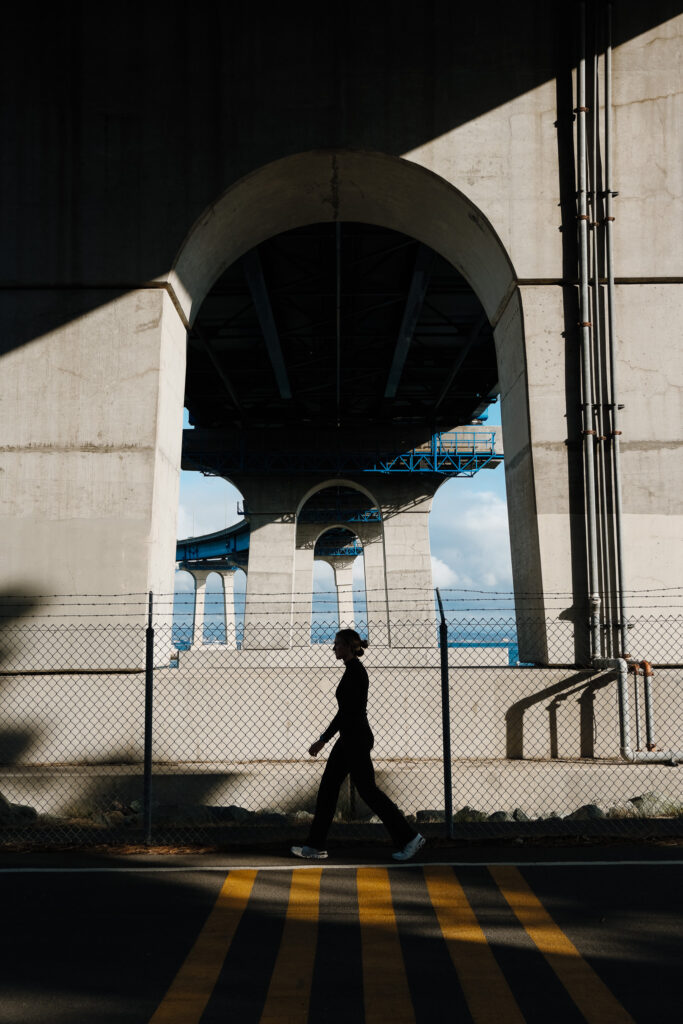
I’ve become obsessed with good light in a way I haven’t been in a long time. So much so that when I left the gym on Valentine’s Day and saw the sky filled with pretty clouds, I raced home to grab my camera. I would’ve never done that with my Sony.

Sure, I still shoot in the bright midday sun sometimes. But it’s mostly for “street photography” style images or when I’m traveling and want to snap pictures.

But now, I find myself feeling genuinely excited to get outside whenever the light is magical. If there’s a glowing sunset or dramatic fluffy clouds, I’m there.
Recommended read: Why I Got a Fujifilm X-T50 (and not an X-T5)
I am more intentional with my shutter
Speaking of being more intentional about the light I take pictures in, I’ve also become more intentional about the photos I take. Previously, if a scene caught my eye, I’d fire away without thinking twice. But now, I have found myself not taking the picture if it doesn’t feel quite right in the moment.
In the past, I never would’ve skipped a shot. I was the definition of shutter-happy.
But those shutter-happy moments usually never led to amazing images, but rather a sea of average photos that only took me out of living in the present moment.
Maybe this camera was my wake-up call to this reality? Or maybe, as I’ve gained experience with the X-T50, I can tell when I’m going to like an image I’m taking or not. Who knows. But I’m here for it.
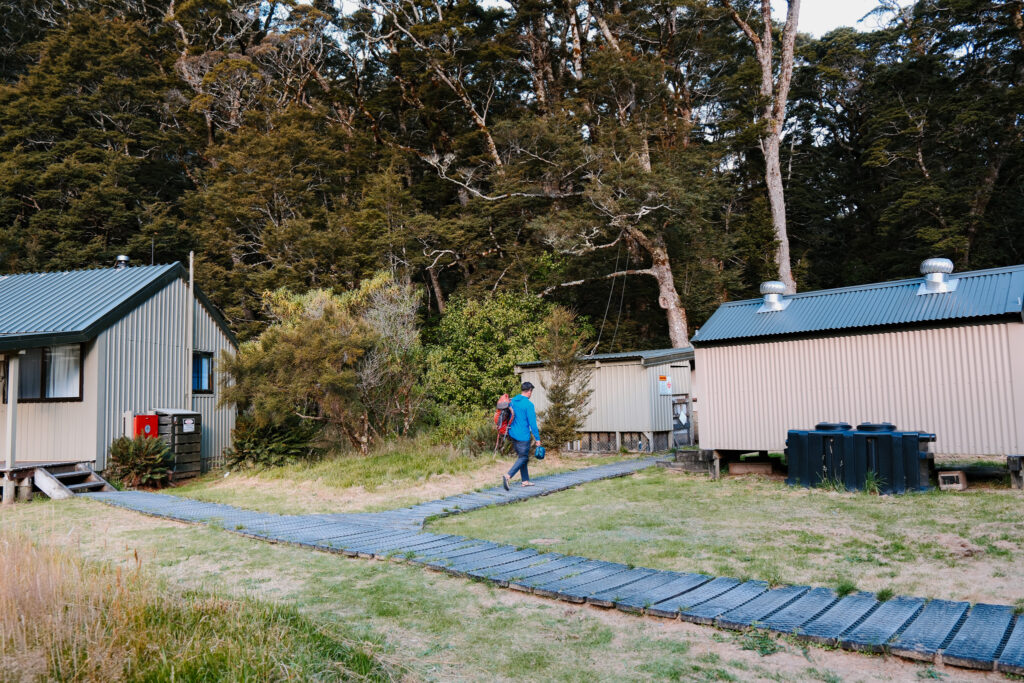
With that said, this progression hasn’t happened instantly and I’m not officially cured of my shutter-happy “illness”, but I have become more intentional with my shutter, that’s for sure.
And I kind of love this change for me.
Recommended read: Fujifilm X-T50: First Impressions and Experience
Goodbye to overediting pictures
For over a decade, I bounced between Canon and Sony cameras, always shooting in RAW and editing in Lightroom. And while I’ve always loved taking pictures, I’ve never loved spending hours editing them.
I’ve tried it all when it comes to editing. I’ve edited from scratch, used other photographers’ presets, and even created my own presets. But in recent years, I started getting lazy with editing. I would slap on a preset, add a few masks, and call it a day. And I felt like I was outgrowing my overedited look.
The Fujifilm X-T50 helped me break that habit. The film simulations (and shooting in good light) give my photos just enough “something” that they often feel nearly complete straight out of the camera.
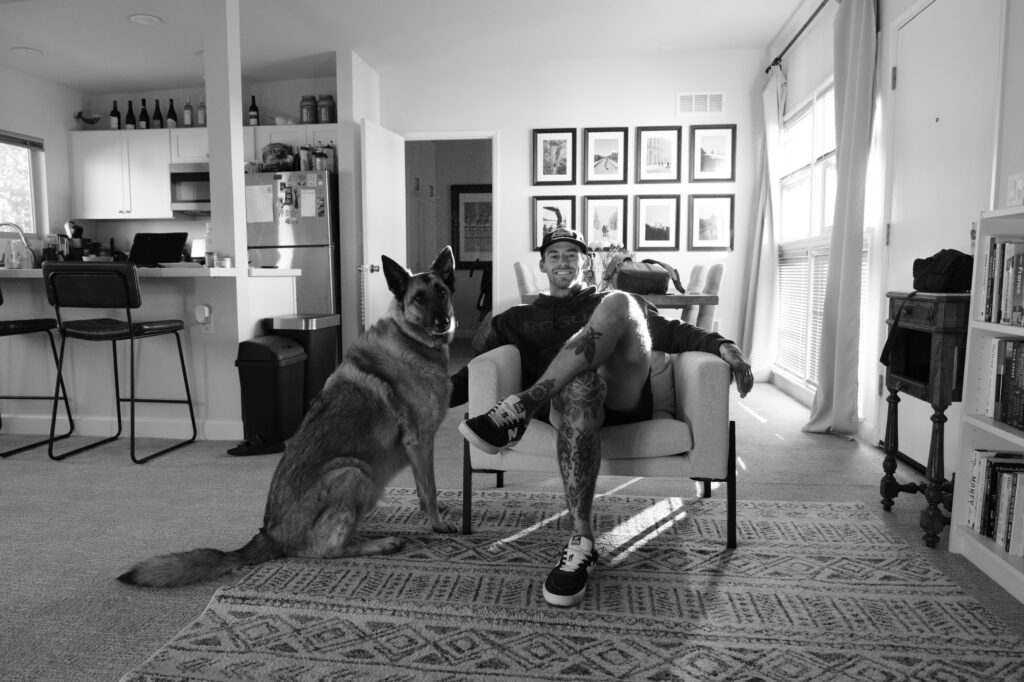
This shift actually started with the Fujifilm Instax Mini Evo. That little camera quietly changed how I saw color. It made me want to stop over-editing my pictures and make the colors look more natural.
The X-T50 has taken that even further. Now, I find myself more focused on getting the image right in-camera, so I don’t have to do much in post. I still edit in Lightroom, but I try to do so minimally. The photos aren’t perfect, but with each one, I’m learning and getting better.
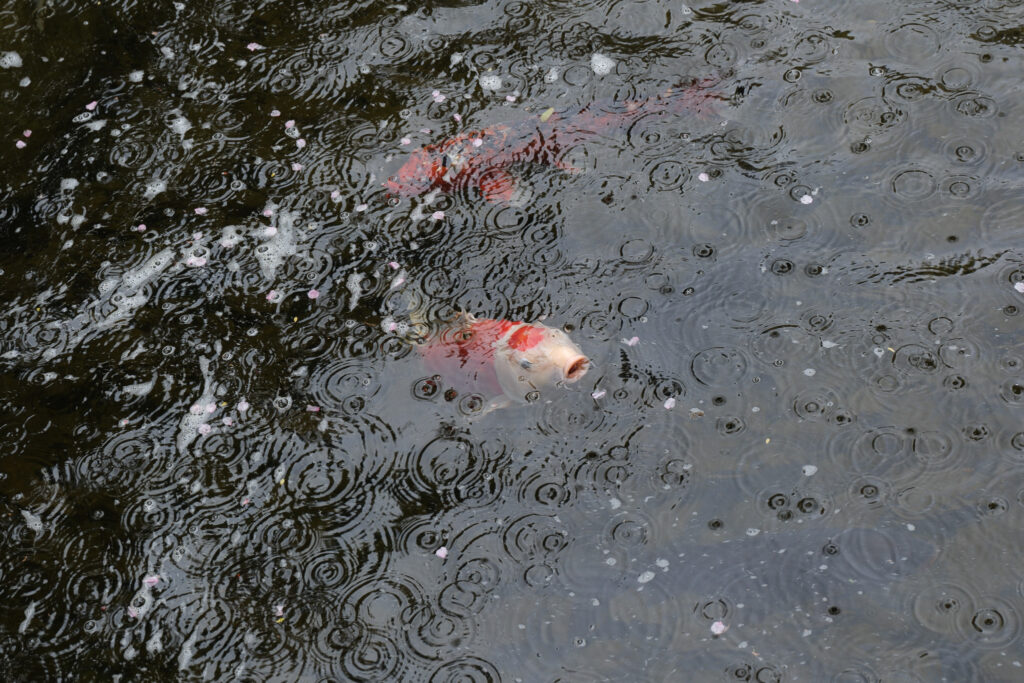
Recommended read: Fujifilm Instax Mini Evo: The camera that got me out of a funk
It has sped up my editing process.
Building on my last point, the Fujifilm X-T50 has also sped up my editing process in a big way.
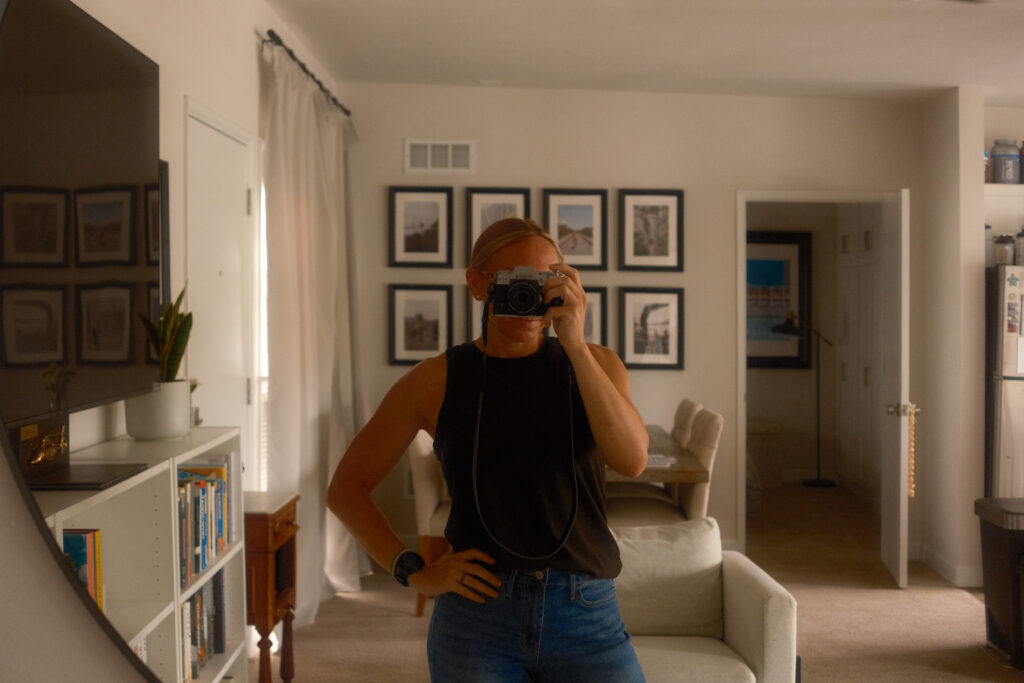
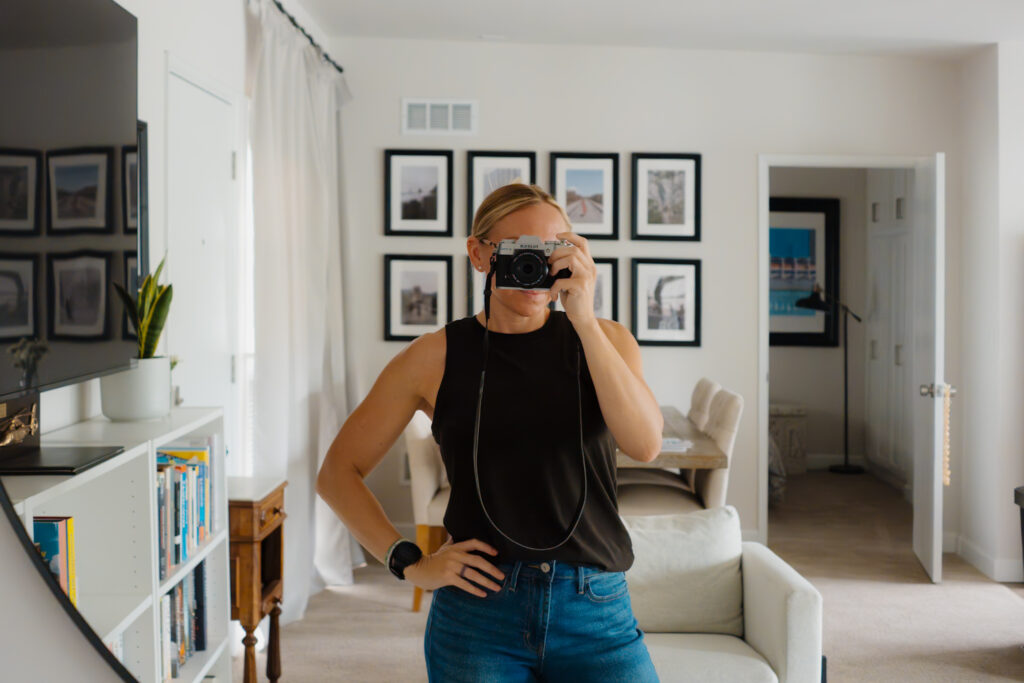
I have the camera set to record both a RAW and a JPG file for each shot. If you’re unfamiliar, the JPG will have the film simulation applied in-camera, while the RAW file preserves all the unedited data.
For a while, I sent the JPG images straight from my camera to my phone. I liked the way the images looked with film simulations applied, so I would only need to make a few tweaks in the iPhone Photos app or Lightroom Mobile before I shared them with others or posted them online.
This shift is wild to me, as someone who has obsessively used Lightroom. I have found that when I get the exposure and light right, these in-camera JPGs look so good they barely need anything.


That’s not to say I never edit RAW files, I still do occasionally, especially if I’m not happy with the film simulation I used or want a different look for an image. But even then, I find myself editing more minimally, aiming only to enhance the natural feel of the scene rather than drastically change it.
And while I’d love to say I’m completely free of overediting images, that would probably be a lie. I still occasionally have to remind myself to dial things back.
And sometimes I do spend extra time editing, especially if I really love the image and believe it’s worth the effort. For example, photos that require lots of masking, spot removals, or other detailed adjustments. But honestly, those are few and far between.
By the way, if you’re unsure how to shoot outside of automatic mode, check out my beginner-friendly guide below. It’s designed to help you feel confident with your camera while building consistency.

My street photography has changed
The autofocus on the Fujifilm X-T50 has really shifted the way I shoot street photos.
When I first started using the XT50, I missed a lot of shots because the autofocus wasn’t as quick or reliable as my old Sony camera. I used to be able to snap candid moments without worrying if the camera would catch the focus, but with the XT50, that wasn’t the case.
Instead of fighting it, I adjusted my approach.
Now, I often ask people if I can take their picture, rather than trying to capture secret or spontaneous shots. This has made my street photography feel more intentional and connected, especially since lately, I’ve been working on a photo project in my neighborhood.

Honestly, it’s been a positive change, helping me slow down and engage more with my subjects.
I can see now that I needed the push to get out of my comfort zone and be more intentional about the shots I’m taking. Thank you to Fujifilm’s autofocus for giving me that push. A silver lining, I guess?
Recommended read: Photo Project: Life in Coronado, California
Final thoughts
Admittedly, I’m not a gearhead when it comes to photography. I’ve always made practical purchases and stuck to using the bare minimum. For the past four years, I’ve relied on a lightweight Sony APS-C camera and just two lenses: a 24mm and a 50mm equivalent.
They got the job done. But somewhere along the way, I got bitten by the Fujifilm bug. And I’m so glad I did.
In just 3 short months, my Fujifilm X-T50 has shifted how I approach photography. It’s helped me slow down, get excited about chasing good light again, and helped me become more intentional, both when I’m out shooting and when I sit down to edit.
I’m still learning, still experimenting, and still evolving in how I see and photograph the small sliver of the world I get to experience, but for the first time in a long time, I’m looking forward to the process again.
And that excites me the most.